Bali Water Temples: Institutions for Collective Action
“Emergent Properties of Balinese Water Temple Networks: Coadaptation on a Rugged Fitness Landscape” is a summary of the work Stephen Lansing reported in his book, Perfect Order. The ways Balinese farmers evolved their water temple system is a breathtaking symphony of institutions for collective action, religion, agronomy, and ecology. Lansing summarizes in this 15 minute video.
During the "green revolution" of the 1950s, Western agricultural scientists tried to multiply rice outfit in Bali by changing the traditional methods that involved quasi-religious institutions known as "water temples" that regulated the way rice farmers cooperated to share water and repel pests. Agriculturalists introduced new varieties of rice and nitrogen fertilizers and moved from a system in which farmers alternately grew and left fallow their fields to a year-round cycle of planting and harvesting. The rice crop multiplied, then the entire system collapsed.
Lansing brought in anthropologists and ecologists to try to understand the collapse. It turned out that if farmers did not regulate the order in which they left their fields flooded but unplanted, rats would multiply and eat the crops. The system of water temples had evolved over centuries. Although it was quasi-religious, the water temple system turned out to be a sophisticated method for assigning fallow fields and sharing water. (Water sharing is a classic social dilemma, as upstream users have no incentive to share with downstream users.)
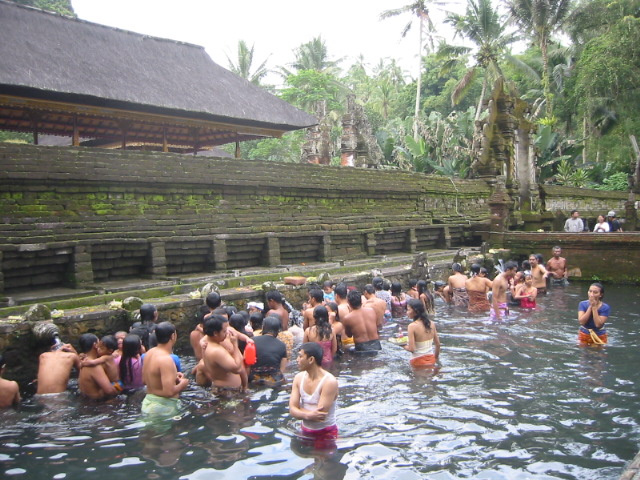
When I visited Bali, I made a point of visiting the water temples: